
搜索算法(二)--DFS/BFS求解拯救同伴问题(JAVA)
问题描述:假设有如下迷宫,求解从某一点出发到目标位置的最短距离
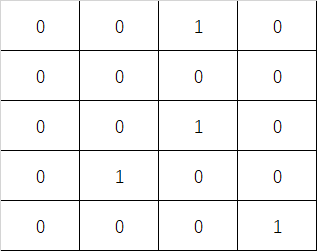
Input: 5 4 0 0 1 0 0 0 0 0 0 0 1 0 0 1 0 0 0 0 0 1 1 1 4 3
Output: 7
深度优先搜索(DFS)
1
2
3
4
5
6
7
8
9
10
11
12
13
14
15
16
17
18
19
20
21
22
23
24
25
26
27
28
29
30
31
32
33
34
35
36
37
38
39
40
41
42
43
44
45
46
47
48
49
50
51
52
53
54
55
56
57
58
59
60
61
62
63
64
65
66
67
68
69
import java.util.Scanner;
public class DFS {
static int[][] a = new int[51][51];
static int[][] book = new int[51][51];
static int n, m, p, q, min = 99999999;
static int sum = 1;
public static void main(String[] args) {
Scanner input = new Scanner(System.in);
n = input.nextInt();
m = input.nextInt();
for (int i = 1; i <= n; i++) {
for (int j = 1; j <= m; j++) {
a[i][j] = input.nextInt();
}
}
int startX = input.nextInt();
int startY = input.nextInt();
p = input.nextInt();
q = input.nextInt();
book[startX][startY] = 1;
dfs(startX,startY,0);
System.out.println(min);
}
public static void dfs(int x, int y, int step) {
/**
* 按照右,下,左,上的顺时针顺序遍历
* 定义一个方向数组,便于操作
* */
int[][] next = {{0, 1}, {1, 0}, {0, -1}, {-1, 0}};
int tx, ty;
/**
* 是否到达目标位置,更新最小值
* */
if (x == p && y == q) {
min = min < step ? min : step;
return;
}
/**
* 计算下个点的坐标
* */
for (int i = 0; i < 4; i++) {
tx = x + next[i][0];
ty = y + next[i][1];
/**
* 检查临界
* */
if (tx < 1 || tx > n || ty < 1 || ty > m) {
continue;
}
/**
* 不是障碍物,也未加入路径中,则执行dfs,注意回溯
* */
if (a[tx][ty] == 0 && book[tx][ty] == 0) {
book[tx][ty] = 1;
dfs(tx, ty, step + 1);
/**
* 为了找到最短的路径必须进行回溯
* */
book[tx][ty] = 0;
}
}
}
}
同样的广度优先搜索(BFS)也可以接这个题目,但是要注意广度优先搜索需要有一个队列Queue来控制。这里需要创建一个Point类来保存坐标和距离。 另外,由于java本身没有提供队列获取队尾元素的api,所以在下面的算法中需要注意处理,方法不唯一。
广度优先搜索(BFS)
1
2
3
4
5
6
7
8
9
10
11
12
13
14
15
16
17
18
19
20
21
22
23
24
25
26
27
28
29
30
31
32
33
34
35
36
37
38
39
40
41
42
43
44
45
46
47
48
49
50
51
52
53
54
55
56
57
58
59
60
61
62
63
64
65
66
67
68
69
70
71
72
73
74
75
76
77
78
79
80
81
82
83
84
85
86
87
88
89
90
91
92
93
import java.util.LinkedList;
import java.util.Queue;
import java.util.Scanner;
class Point{
public int x;
public int y;
public int s;
Point(int x, int y, int s) {
this.x = x;
this.y = y;
this.s = s;
}
}
public class BFS {
static int[][] a = new int[51][51];
static int[][] book = new int[51][51];
static Queue<Point> queue = new LinkedList<>();
static int n, m, p, q;
static int min = 99999999;
public static void main(String[] args) {
Scanner input = new Scanner(System.in);
n = input.nextInt();
m = input.nextInt();
for (int i = 1; i <= n; i++) {
for (int j = 1; j <= m; j++) {
a[i][j] = input.nextInt();
}
}
int startX = input.nextInt();
int startY = input.nextInt();
p = input.nextInt();
q = input.nextInt();
queue.add(new Point(startX, startY, 0));
book[startX][startY] = 1;
bfs();
System.out.println(min);
}
public static void bfs() {
/**
* 按照右,下,左,上的顺时针顺序遍历
* 定义一个方向数组,便于操作
* */
int[][] next = {{0, 1}, {1, 0}, {0, -1}, {-1, 0}};
int tx, ty;
int flag = 0;
while (!queue.isEmpty()) {
for (int i = 0; i < 4; i++) {
tx = queue.peek().x + next[i][0];
ty = queue.peek().y + next[i][1];
/**
* 临界条件
* */
if (tx < 1 || tx > n || ty < 1 || ty > m) {
continue;
}
/**
* 非障碍物,未标记为1,则进行入队操作
* */
if (a[tx][ty] == 0 && book[tx][ty] == 0) {
/**
* 标记为已拓展,不同于DFS的是,BFS每个点只会被拓展一次,无需进行回溯
* */
min = queue.peek().s + 1;
book[tx][ty] = 1;
queue.add(new Point(tx, ty, min));
}
if (tx == p && ty == q) {
flag = 1;
break;
}
}
if (flag == 1) {
/**
* 这里要注意的是,每次拓展完,且未到达目标位置时都会移出队首元素一次,
* 但是最后一次队列中至少存在两个元素,即正在处理的点,和这个点拓展到的目标
* 而直接出队操作是做不到的(即使将出队操作提前也不能实现),而且,
* 当大于两个点的时候,一次出队也不能起到实质性的作用
* 所以在这里我们在上个判断中直接改变全局变量mark的值即可实现
* */
break;
}
queue.remove();
}
}
}